
The Housewarming Gifts That Actually Get Used
Skip the candles. These are the housewarming gifts that earn permanent counter space.
Marcus Delaney
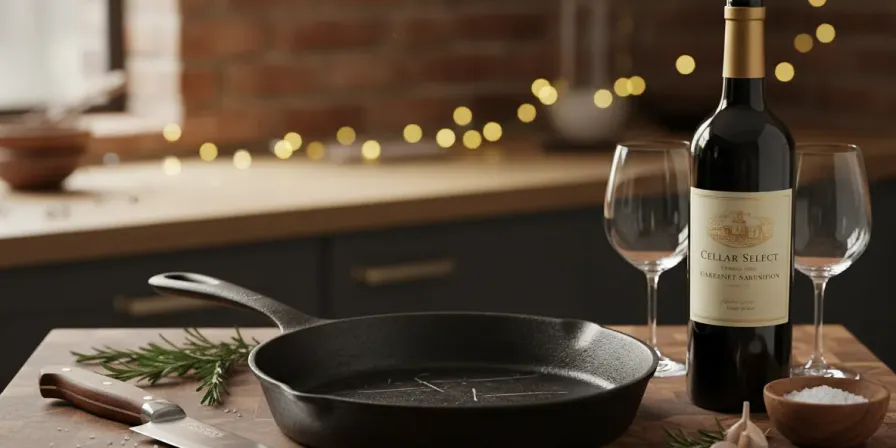
I once watched a guy unwrap three candles at his own housewarming. He smiled politely, stacked them on the kitchen counter, and I’m willing to bet they’re in a junk drawer now. This isn’t his fault — it’s ours. We’ve collectively decided that housewarming gifts are decorative obligations rather than actual tools for building a life in a new space.
The premise is simple: a housewarming gift should make the new place feel like home faster. Not look nice on a shelf. Not smell pleasant for a week. Actually speed up the process of someone becoming comfortable in their own kitchen, their own space.
I’ve moved four times in twelve years. I’ve been on both ends of this exchange — the giver and the receiver. I know what ends up in regular rotation and what ends up regifted at the next birthday party. I keep a small kitchen — I call it the small room where big things happen — and every tool in it earned its spot by being useful, durable, and a little bit beautiful. That’s the standard I use when I’m picking a gift for someone starting fresh.
Here are the rules I play by before we get into the specifics.
The Rules I Play By
One: Does it earn counter space? Counter space is sacred real estate. If the thing requires assembly, special care, or a decorative bowl to live in, it doesn’t belong. The best kitchen tools look a little beat up. They show life.
Two: Will it be used in the first month? Not “someday when I get around to it.” In the first month. If I can’t picture the recipient reaching for it while making dinner on a random Tuesday, I’m not giving it.
Three: Can I pair it with something specific? A gift without context is a missed opportunity. A knife paired with a great bottle of olive oil and a recipe for cacio e pepe is a story. A knife in a box is just a knife.
Four: Would I keep this myself? This is the real test. If my own kitchen wouldn’t have a permanent spot for it, I’m not giving it to someone else’s.
One more thing before the list: skip the unitaskers. I once received an egg separator as a housewarming gift. An egg separator. A tool whose entire purpose can be accomplished by cracking an egg into your hand and letting the white slip through your fingers. If your gift does exactly one thing, and that thing isn’t important, leave it on the shelf. I promise you: nobody in the history of homeownership has said, “What I really needed was a banana slicer.”
If you’re buying for someone who claims they already have everything they need, Leo Vance has a different take on that problem in his gifts for the person who has everything guide. The philosophy is the same even if the occasion is different.
The Gifts
Mac Professional 8” Chef’s Knife — ~$80
Here’s the thing about chef’s knives: everyone thinks they need a fancy set in a wooden block. They don’t. They need one really good 8-inch blade and nothing else.
The Mac Professional 8” Chef’s Knife is the one I’ve used for six years. It weighs almost nothing, holds an edge longer than knives that cost twice as much, and cuts a tomato so clean it barely bruises the skin. That’s my test. If a knife crushes a tomato, it’s a bad knife. Full stop. The Mac glides through. You hear that little shhhk as the blade passes through the skin, and the slices come out clean and even. That sound is the whole thing for me.
Pair it with: A bottle of good olive oil (California Olive Ranch is my go-to under $15) and a card with a handwritten recipe for cacio e pepe. The beauty of that dish is it requires exactly three ingredients and one very sharp knife. You’re not just giving them a tool. You’re giving them confidence.
The caveat: High-carbon steel means it can rust if left wet in the sink. “Don’t put this in the dishwasher, and don’t leave it soaking. Dry it after you wash it. It’ll last you twenty years.”
Idahone 12” Honing Steel — ~$15
This is the unglamorous partner to the knife. Most people who buy a nice knife never sharpen it. They Google “knife sharpening near me” once, never follow through, and slowly watch their blade become a wedge. What they actually need is a honing steel.
The Idahone 12” Honing Steel is what professional kitchens use. It’s ceramic, which means it refines the edge without taking off much metal. Run your knife through it before every few uses and you’ll maintain that clean slice for years. Most home cooks go years without ever needing professional sharpening because they hone regularly.
Pair it with: Just the knife, honestly. If you want to go further, add a small magnetized wall strip so they can hang it within reach. Nothing kills a good habit like having to dig through a drawer to find the tool.
The caveat: It doesn’t replace sharpening forever. Eventually — once a year or every two years depending on use — they’ll want to get it professionally sharpened. But that’s a problem for later, and you’ve given them years of good cutting first.
Lodge 10.25” Pre-Seasoned Cast Iron Skillet — ~$35
Thirty-five dollars. That’s the price of a mediocre bottle of wine, and this skillet will outlast every bottle you’ll ever buy.
I bought my Lodge when I moved into my first apartment in New Orleans. That was fourteen years ago. It’s been through roughly three thousand dinners, a handful of camping trips, and one incident involving a cornbread recipe I’d rather not discuss. It sits on my stovetop right now because it’s too heavy to put away and too useful to try.
Cast iron is the great equalizer in a new kitchen. You can sear a steak in it, bake a skillet cookie, make a Dutch baby, fry an egg, or just use it as a weight to press a grilled cheese. It goes from stovetop to oven without asking permission. And it gets better with use — the more they cook in it, the more nonstick the surface becomes.
The Lodge 10.25” Pre-Seasoned Cast Iron Skillet is the specific one I’d point you toward. It’s preseasoned at the factory, which means it’s ready to use right out of the box. No weeks of oiling and baking. No frustration. Just cook.
Pair it with: A small bottle of flaxseed oil for reseasoning (you only need a teaspoon every few months) and a recipe for smash burgers. Cast iron plus high heat plus smashed beef patties equals something they’ll make every single weekend once they try it.
The caveat: It weighs about five pounds. That’s not a flaw, it’s physics. Also, it’s not great for acidic sauces until the seasoning is well-established. Let them know: tomato-based stuff can wait a few months.
Proteak Edge-Grain Cutting Board (14x10”) — ~$70
Most people’s first cutting board in a new apartment is a flimsy plastic thing from a big-box store. It slides around the counter, warps after three washes, and develops grooves that trap bacteria like a sponge. Giving someone a real cutting board is quietly one of the most useful things you can do.
The Proteam Edge-Grain Cutting Board (14x10”) is teak — dense, naturally oil-rich, and resistant to moisture in a way that maple and bamboo aren’t. Edge-grain construction means it’s built to take a beating without showing every knife mark. It’s heavy enough to stay put on the counter, and the juice groove around the edge actually works, which is more than I can say for most boards.
There’s something about cooking on a good wooden board that changes the experience. The sound of a knife hitting wood instead of plastic. The way it feels under your hands when you’re rolling dough. It’s a small upgrade that makes the whole kitchen feel more intentional.
Pair it with: A bottle of food-grade mineral oil and a note: “Oil this once a month and it’ll outlast your mortgage.” Simple, practical, and true.
The caveat: Teak requires occasional oiling. Once a month if they use it daily, less if they don’t. It’s not high maintenance but it does ask something of them. If that’s too much, get them a good plastic board and save yourself the guilt.
The Spice House Housewarming Spice Collection — ~$40–55
Here’s what I see in every new kitchen: a cabinet full of half-empty spice jars from 2019. The cumin is gray. The oregano is something vaguely related to oregano. They open the jar and smell disappointment.
The The Spice House Housewarming Spice Collection solves this in one shot. Their spices are fresher than anything you’ll find at a grocery store, sourced from origin, and ground in small batches. Open a tin of their smoked paprika and you’ll understand. It smells like a campfire decided to become delicious.
Pair it with: A recipe card for something simple that uses three or four of the spices — a chili, a shakshuka, a basic chicken marinade. Give them a starting point, not just ingredients.
The caveat: Some people are intimidated by whole spices. They look at the cumin seeds and don’t know where to start. If your friend is the type who needs instructions, make the recipe card mandatory, not optional.
If the person you’re shopping for is specifically starting from scratch in the kitchen, I wrote a more focused guide on gifts for someone learning to cook — it goes deeper on the beginner mindset.
Le Creuset Stoneware Wine Decanter — ~$65
I spent twelve years behind a bar. I’ve poured thousands of bottles of wine. And I’ll tell you this: most people don’t decant their wine because they think it’s pretentious. It’s not. It’s practical. A $15 bottle of red tastes noticeably better after twenty minutes in a decanter. The tannins soften, the aromas open up, and the whole thing goes from “fine” to “oh, that’s actually good.”
The Le Creuset Stoneware Wine Decanter is substantial without being fussy. It looks like it belongs in a magazine but it’s actually dishwasher safe. No fragile crystal neck that’s going to snap when someone’s three glasses in and reaching across the counter.
If you’re moving from housewarmings to weddings and wondering what else earns permanent space on someone’s shelf, Priya Sharma has some unique wedding gifts off the registry that follow the same philosophy.
Pair it with: A bottle of something worth decanting. Nothing crazy — a $20 Côtes du Rhône or a decent Malbec. Include a note: “Pour this in, wait twenty minutes, then call me and tell me how it tastes.” You’ve just given them an experience, not just an object.
The caveat: It’s stoneware, not crystal, so it’s heavier. If your friend has opinions about tannins and aeration airflow rates, get them something else. If your friend just wants their wine to look pretty and themselves to feel fancy for an evening, this is perfect.
Williams Sonoma Kitchen Flour Sack Towels (Set of 3) — ~$30
I know. Towels. Doesn’t sound exciting. But hear me out.
Most people’s first kitchen towels are thin, decorative, and useless. They smear water around instead of absorbing it. They stain if you look at them wrong. They end up as decoration draped over the oven handle, doing nothing.
Flour sack towels are different. They’re thin but absurdly absorbent. They dry glasses without leaving lint. They cover rising bread dough. They work as a makeshift strainer in a pinch. They’re the unsung workhorses of a functioning kitchen.
The Williams Sonoma Kitchen Flour Sack Towels (Set of 3) is a tight, smooth weave that holds up wash after wash. They come in simple, clean designs that don’t embarrass you when guests are over.
Pair it with: Nothing. They’re flour sack towels. They’re the gift.
The caveat: They wrinkle. If your friend is the type who judges anything that doesn’t look freshly pressed, get them something else. For everyone else, they’ll wonder how they ever lived without them.
One More Thing: How to Give It
Presentation matters. Not in an “Instagram-worthy unboxing” way — in a “this feels considered” way.
Don’t show up with an Amazon box and a gift receipt. Wrap it — even if it’s just brown paper and twine. Include a handwritten note. If you’re pairing the gift with a recipe, write the recipe on a card by hand. It takes five minutes and it changes the entire feeling of the exchange.
If you’re bringing a knife, there’s an old tradition: tape a penny to the handle. The recipient “buys” the knife from you for a penny, which turns the gift into a transaction and sidesteps the superstition that a gifted knife cuts the friendship. Is it silly? A little. Is it a great conversation starter at a housewarming party? Absolutely.
And if you can, bring something that’s ready to eat or drink that night. A bottle of wine to decant. A wedge of good cheese to put on that new cutting board. A bag of tomatoes for the knife. The best housewarming gifts aren’t just objects — they’re the start of a meal, a conversation, a first memory in a new space.
The Short List
| Gift | Price | The Move |
|---|---|---|
| Mac Professional 8” Chef’s Knife | ~$80 | Foundation of a real kitchen |
| Idahone 12” Honing Steel | ~$15 | The habit that keeps the knife alive |
| Lodge 10.25” Pre-Seasoned Cast Iron Skillet | ~$35 | One pan, infinite possibilities |
| Proteam Edge-Grain Cutting Board | ~$70 | Where the work actually happens |
| The Spice House Housewarming Spice Collection | ~$40–55 | The cheapest upgrade in any kitchen |
| Le Creuset Stoneware Wine Decanter | ~$65 | The home they want to be in |
| Williams Sonoma Kitchen Flour Sack Towels | ~$30 | The gift that earns its space |
Final Thought
I’ve never regretted giving someone a good knife. I’ve regretted plenty of other things — the herb garden kit that died in a week, the fancy olive oil that sat on a shelf until it went rancid, the espresso machine that required an engineering degree to operate. But the tools that earn their place in a kitchen? Those keep showing up. They become part of someone’s daily rhythm. They make the new house feel like home not because they’re special, but because they’re used.
That’s the whole point. Don’t give someone something that makes their house look like a home. Give them something that helps them live in it.
If you’re in a time crunch, James Wright’s take on last-minute gifts that don’t look rushed applies here too — the practical-over-flashy approach works regardless of your deadline.
Marcus Delaney
Former bartender turned food writer. Believes the best gift is one that brings people around a table. Will judge your knife by how it cuts a tomato.