
Best Gifts for Someone Learning to Cook for the First Time
Skip the overpriced gadgets. Marcus Delaney picks the gifts that actually help someone learn to cook — beginner knife sets, spice kits, cookbooks, and more.
Marcus Delaney
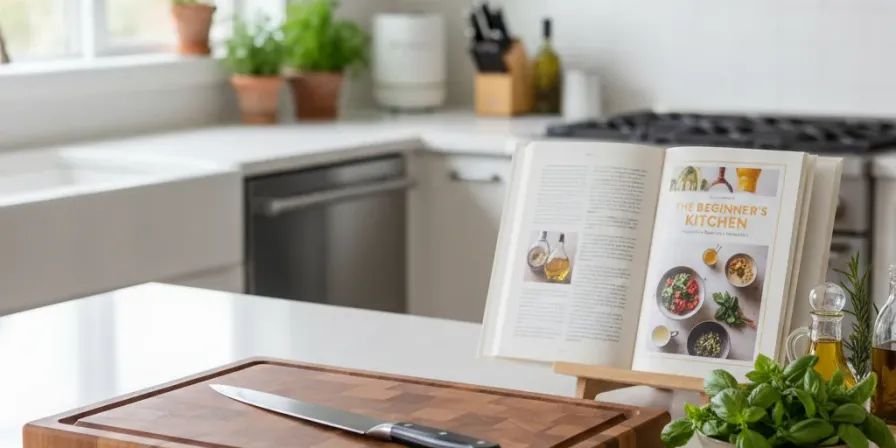
Best Gifts for Someone Learning to Cook for the First Time
I learned to cook because I was broke and tired of eating cereal at 11pm after bartending shifts. That’s it. No culinary awakening, no grandmother’s kitchen, no farmers’ market revelation. Just a guy in a studio apartment with a dull knife and a bag of rice, figuring it out one burnt meal at a time.
So when someone tells me they’re “learning to cook for the first time,” I don’t hear a hobby question. I hear someone standing in a kitchen that doesn’t feel like theirs yet, wondering if they’re about to embarrass themselves. The college kid moving into their first apartment. The friend who just got divorced and is staring at a fridge meant for one. The person whose partner always handled dinner and now dinner is just… them.
These people don’t need a $400 Dutch oven or a sous vide circulator. They need three things that work, and the quiet confidence that comes from using them. Here’s what I’d actually put in their hands.
A Knife That Cuts a Tomato Without Crushing It
This is the hill I will die on. If you give a beginner cook one thing, give them a knife that works.
I judge every knife the same way: the tomato test. Take a ripe tomato, set it on a cutting board, and draw the blade across the skin. If it glides through without pressure, without squishing juice onto the board, without that awful sawing motion — you’ve got a knife. If it mashes the tomato into a sad red puddle, you’ve got a butter knife with ambitions.
My pick: Victorinox Fibrox Pro 8-inch Chef’s Knife (~$35-45)
This is the knife I recommend to everyone, and I mean everyone. It’s what you’ll find in restaurant kitchens where the cooks aren’t trying to impress anyone — they’re just trying to get through service. The blade is thin enough to stay sharp, the handle doesn’t get slippery when your hands are wet, and it costs less than a decent dinner out.
I’ve had mine for six years. I’ve used it to break down chickens, mince garlic at 2am, and cut a tomato so cleanly it made me emotional once after a long shift. It’s not beautiful. It doesn’t have a Damascus steel pattern or a handle made from reclaimed wood. It just works, every single time.
The honest caveat: It won’t hold an edge as long as a $150 knife. But a beginner doesn’t need a knife that holds an edge for months — they need a knife that’s sharp right now and easy to sharpen when it dulls. A $10 pull-through sharpener and this knife will outperform any expensive blade sitting in a drawer because someone’s afraid to use it.
Pair it with: A simple stir-fry recipe printed on a card. Something where they’ll use the knife six or seven times in one session and realize, halfway through, that they’re not scared of it anymore. That moment — “oh, I’m actually doing this” — is worth more than the knife itself.
A Cookbook With Pictures, Not Just Words
Here’s what nobody tells beginners about cookbooks: most of them are written for people who already know what “fold” means, who can eyeball a tablespoon, who understand that “cook until golden brown” is doing a lot of heavy lifting in that sentence.
A beginner needs a cookbook that shows them what the thing is supposed to look like at every step. Not just the final glamour shot — the messy middle. The onions at the translucent stage. The chicken when it’s ready to flip. The dough when it’s been kneaded enough.
My pick: Salt, Fat, Acid, Heat by Samin Nosrat (~$20-28)
I know, I know — everyone recommends this book. There’s a reason. Samin doesn’t just give you recipes. She teaches you why food tastes good. The illustrations by Wendy MacNaughton are genuinely beautiful and, more importantly, they’re useful. You’ll understand what’s happening in the pan instead of just following instructions like a robot.
The first time I read it, I realized I’d been salting pasta water wrong for a decade. A decade! And I was a professional. The book is generous in the way the best teachers are generous — it assumes you’re smart, you just haven’t been shown this yet.
The honest caveat: It’s not a quick-reference weeknight cookbook. It’s dense. Some beginners will find it intimidating — “I just wanted to make dinner, not study food science.” If your recipient is the type who glazes over at long explanations, go with How to Cook Everything: The Basics by Mark Bittman instead. More recipes, less theory, still excellent.
Pair it with: A bag of good flaky salt (Maldon, $8) and a sticky note that says “start with the roast chicken on page 247.” That recipe alone is worth the price of the book.
A Meal Kit Subscription (But Not Forever)
I have complicated feelings about meal kits. On one hand, they produce a lot of packaging waste and they’re not cheap. On the other hand, they are genuinely brilliant at teaching one specific thing: repetition.
When you get a meal kit, you’re going to chop onions three times that week. You’re going to sear chicken breasts twice. You’re going to make a pan sauce on Tuesday and another one on Thursday. By the third time, the thing that terrified you on Monday is just… a thing you do now. That’s how cooking actually works. You don’t learn it in a single dramatic moment. You learn it by doing it badly, then less badly, then okay, then well.
My pick: HelloFresh or Blue Apron gift card (4-8 weeks, ~$50-100)
Don’t commit someone to a year of meal kits. That’s a relationship, not a gift. A gift card for 4-8 weeks gives them enough time to build some confidence and figure out if they actually like cooking — or if they just needed a bridge to get through the learning curve.
HelloFresh is a bit more beginner-friendly (simpler recipes, fewer steps). Blue Apron pushes you a little harder and introduces more techniques. I’d send HelloFresh to the nervous college kid and Blue Apron to the recently divorced friend who’s channeling their frustration into productivity.
The honest caveat: The portions can be inconsistent, the produce isn’t always peak freshness, and you will accumulate an alarming number of tiny packets of soy sauce. Also, canceling requires a phone call with some of these services, which is genuinely annoying. Warn the recipient.
Pair it with: A nice bottle of hot sauce and a promise to be their first taste-tester. Cooking alone is lonely. Cooking with someone — even over FaceTime from their own kitchen — makes it social. And social things get repeated.
A Spice Collection That Doesn’t Require a PhD
The spice aisle is where beginner cooks go to have a panic attack. There are 400 jars, half of them look identical, and you have no idea if you need “smoked paprika” or “sweet paprika” or “hot paprika” or “paprika that’s been whispered to by a Spanish grandmother.”
A beginner doesn’t need all of that. They need about eight spices that cover 90% of home cooking, and they need someone to tell them which eight.
My pick: A curated starter set from a good spice company (~$30-45)
I like what Burlap & Barrel and Spicewalla do here. They sell small-batch spices that are noticeably more flavorful than the dusty jars at the grocery store, and both offer beginner sets that include the essentials: cumin, chili powder, garlic powder, smoked paprika, oregano, black pepper, cinnamon, and something with a little heat.
The difference between fresh, well-sourced spices and the stuff that’s been sitting on a supermarket shelf for two years is not subtle. The first time someone cooks with real cumin — the kind that smells like it was ground yesterday — they understand why their food never tasted like the recipe promised.
The honest caveat: Small-batch spices are more expensive per ounce. And they come in smaller jars. For a beginner who’s just learning, this is actually fine — they’ll use the spices before they go stale. But if someone’s cooking for a family of six, they’ll burn through that tiny jar of cumin in two weeks.
Pair it with: A simple recipe that uses three or four of the spices in the set. A basic chili, a roasted chicken thigh situation, anything that lets them open the jars and immediately put them to work. Spices are intimidating until you use them, then they’re just… salt’s more interesting cousins.
A Kitchen Scale (The Secret Nobody Talks About)
I resisted a kitchen scale for years. Felt fussy. Felt like something for bakers and people who meal-prep in matching containers. Then I started using one and realized I’d been guessing at measurements my entire adult life, and my guesses were not great.
Here’s what a kitchen scale actually does for a beginner: it removes doubt. “Is that enough flour?” Weigh it. “How much pasta should I make?” Weigh it. “Is this really two tablespoons of peanut butter or am I just eating peanut butter with a spoon?” Weigh it.
My pick: OXO Good Grips 11-Pound Stainless Steel Scale (~$50)
The display pulls out so you can read it even when you’ve got a big bowl on top. The tare function (zeroing out the weight so you can add ingredients to the same bowl) is intuitive. It’s accurate. It wipes clean. That’s it. That’s the whole review.
I use mine almost daily. Coffee in the morning (yes, weigh your coffee, it changes everything), pasta portions at dinner, flour when I’m baking. It sits on my counter and doesn’t take up much space, which is important because beginner kitchens don’t have a lot of counter space to spare.
The honest caveat: Some people will never use it. If your recipient is the type who cooks by feel and instinct — the “a pinch of this, a splash of that” person — a scale might gather dust. It’s a better gift for the anxious beginner, the one who wants to follow recipes exactly before they start improvising.
Pair it with: A bag of flour and a recipe for no-knead bread. It’s the most forgiving bread recipe in existence, and it requires a scale. The recipient will make something they didn’t think they could make, and that feeling — “wait, I made bread?” — is worth more than any gadget.
Silicone Utensils That Won’t Destroy Their Pans
This one’s simple. A beginner is probably cooking with nonstick pans (they should be — nonstick is forgiving and easy to clean). Metal utensils destroy nonstick coatings. So give them utensils that won’t.
My pick: GIR (Get It Right) Ultimate Silicone Spatula Set (~$30-40 for a 3-pack)
GIR makes the best silicone utensils I’ve used. They’re one solid piece — no seams where food gets trapped, no handles that wiggle loose after a month. The spatulas are heat-resistant to 550°F, which means they won’t melt if someone forgets and leaves one resting on the edge of a hot pan (we’ve all done it).
The mini spatula is weirdly my favorite. It gets every last bit of sauce out of a jar, scrapes bowls clean, and is the perfect size for stirring a single portion of something in a small pan. I have four of them and I’m not embarrassed about that.
The honest caveat: Silicone utensils don’t have the same feel as metal or wood. Some people find them floppy. They also stain — if you use a white silicone spatula to stir a tomato sauce, it’s going to come out orange. This is cosmetic and doesn’t affect function, but it bothers some people.
Pair it with: A decent nonstick pan if you’re feeling generous. The Tramontina 10-inch Professional Restaurant Fry Pan runs about $25 and performs shockingly well for the price. A beginner with a good nonstick pan and a silicone spatula can cook 80% of weeknight meals without any drama.
If you’re putting together a gift for someone setting up their first kitchen in a new place, I wrote a broader guide on housewarming gifts that actually get used — the kitchen overlap is real, but there’s more to a home than what fits on the counter.
Quick Picks: The Right Gift for the Right Person
| Recipient | Best Gift | Why It Works | Budget |
|---|---|---|---|
| College student moving out | Victorinox knife + GIR spatula set | Covers the basics without overwhelming them | ~$65 |
| Recently single, learning to cook for one | HelloFresh gift card (4 weeks) | Removes the “what do I even make” paralysis | ~$50 |
| Post-divorce, rebuilding a kitchen | Salt Fat Acid Heat + spice set + scale | Gives them knowledge, flavor, and confidence | ~$95 |
| Anyone, any situation | One good knife + a cookbook | The foundation of everything else | ~$55 |
What I’d Skip
Since we’re here, let me save someone some money.
Unitaskers. Anything that does one job — avocado slicers, egg separators, those garlic peelers that are just rubber tubes. A knife does all of it. Alton Brown was right about this and he’s right about very few things.
Expensive knife sets. A beginner needs one good knife, not a 15-piece block that takes up half their counter. A chef’s knife and a paring knife will handle everything. The other thirteen knives will never get used.
Anything with a blade that scares them. Mandolines are incredible tools. They’re also the reason I have a scar on my left thumb. A beginner doesn’t need that energy in their life.
Gift cards to fancy kitchen stores. Sur La Table and Williams Sonoma are overwhelming for someone who doesn’t know what they need yet. They’ll wander the aisles, feel inadequate, and buy a $60 spatula because it was next to the register. Give them specific things instead.
The Real Gift
Here’s what I’ve learned from years of cooking — first out of necessity, then out of love. The kitchen is the small room where big things happen. It’s where you figure out that you can take care of yourself. It’s where a bad day gets a little better because you made something with your hands. It’s where you learn that feeding people — including yourself — is one of the oldest and most basic forms of care.
When you give someone their first real knife, or their first cookbook, or their first bag of spices that actually smells like something, you’re not giving them kitchen stuff. You’re giving them permission to start. You’re saying: this isn’t as hard as you think, and you’re going to be fine.
And if they claim they already have everything they need? Leo Vance wrote a guide on gifts for the person who has everything that applies in the kitchen too — his approach is always quality over quantity.
That’s worth more than any gadget.
Now go cut a tomato.
Marcus Delaney
Former bartender turned food writer. Believes the best gift is one that brings people around a table. Will judge your knife by how it cuts a tomato.