
Best EDC Gifts That Actually Earn Pocket Space
Quality EDC gift recommendations for the everyday carry obsessive. Knives, flashlights, wallets and tools they'll use daily.

Leo Vance
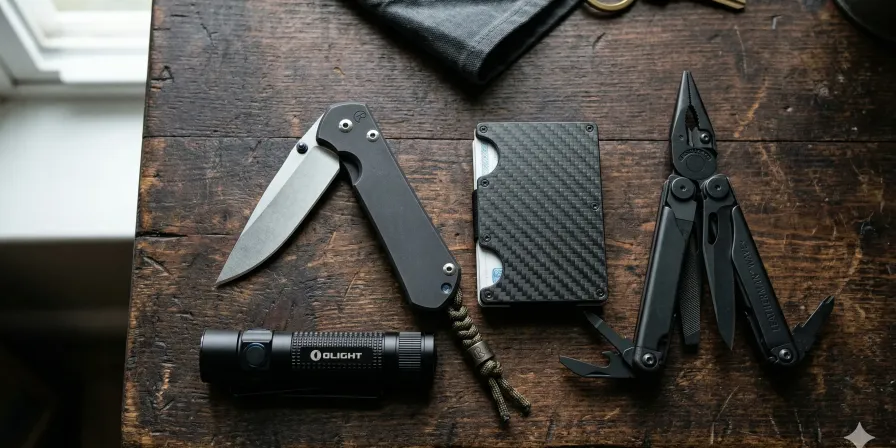
My wife stopped buying me gear after the third time I returned something with “the pocket clip geometry is wrong” as my explanation. She now hands me her credit card and leaves the room.
I tell you this so you understand: buying for an EDC obsessive is a specific challenge. They’re not impossible to shop for. They’re just not shopping for in the usual way. This guide exists to save you from the polite-but-empty “oh, cool, thanks” reaction — and because there are gifts that EDC people genuinely love. Items they’d buy themselves if they hadn’t already spent their budget on that limited-run titanium pry bar last month.
The difference between a good EDC gift and a drawer ornament comes down to one thing: does it earn pocket time? Not shelf time. Not “I’ll rotate it in eventually” time. Actual, daily, in-the-pocket-or-on-the-belt carry. Everything below passes that test.
What Makes an EDC Gift Actually Good
Before the recommendations, a quick framework. EDC people don’t collect gear the way stamp collectors collect stamps. They build systems. Every item in their carry has a job, and they’ve agonized over whether each piece does its job better than the alternatives.
A good EDC gift does one of three things:
It fills a gap. Maybe they carry a knife and a light but have never gotten around to a decent key organizer. Maybe their wallet is a bloated bifold they’ve been meaning to replace for two years. Find the gap.
It represents a tier upgrade. They love their $40 flashlight. They’d love a $90 version even more, but they can’t justify it when the $40 one still works fine. You can justify it. That’s the gift.
It solves a friction point. Something they’ve complained about. “I wish this had a deeper carry clip.” “I hate that this charges via micro-USB.” “The action on this is gritty.” Listen to the complaints. Buy the fix.
The heft test matters too. If a gift feels insubstantial in the hand — light, hollow, plasticky — it fails immediately. EDC people handle their gear dozens of times a day. They notice.
Flashlights: The Gateway Drug of EDC
This is the easiest entry point because the quality jump from a phone flashlight to even a modest dedicated light is dramatic and immediately felt.
The Olight i3T EOS is what I’d buy for someone starting out. Under $40, small enough to clip to a pocket (15 grams without battery), runs on a single AAA, and produces 180 lumens with a neutral white beam (around 5000K — not the cold blue of cheaper lights). The two-way clip is sturdy. The tail switch has a satisfying click. I’ve carried one for two years. It costs less than dinner for two and outperforms anything in its price range.
If you’re spending more, the Olight Baton 3 ($65) is the tier upgrade that actually matters. 1200 lumens, magnetic charging, and build quality that justifies the jump. The beam is slightly warmer. EDC people have opinions about tint. Most people will be perfectly happy with the i3T. The Baton 3 is for someone who wants to stop being satisfied with “good enough.”
What to skip: micro-USB charging in 2025. Anything with a brand that doesn’t have active forums or subreddit followings. Cheap zoomies with aspheric lenses that focus into a hot spot — they’re ineffective and feel flimsy.
Knives: The Loaded Question
Yes, you can give a knife. Almost universally, yes. EDC people love knives. The key is: don’t buy a cheap knife. It’s worse than buying nothing. The immediate impression is “you didn’t know knives have quality tiers.”
The sweet spot is $60-$120. Below that, you’re gambling on quality control. Above that, you’re entering “I already have a knife I love in this price range” territory.
For someone who probably carries a decent knife already (Spyderco Tenacious, Ontario Rat 1, Benchmade Bugout), the Civivi Elementum ($65) is the gift that doesn’t overstep. D2 or Nitro-V steel holds an edge well for daily use. The action is smooth — thumb flick or flipper, both work. The fit and finish are better than anything in its price range should be. It comes in several handle materials; G10 if you want practical, the cotton micarta if you want something that develops character over time.
If they’ve already landed on an Elementum, the Kizer Begleiter 2 ($65-$80) is the natural next step. The button lock is smoother and more fidget-friendly than the Elementum’s liner lock. VG-10 steel holds an edge well and sharpens easily. Kizer’s fit and finish has gotten genuinely consistent in the last two years — less unit-to-unit variance than it used to be, which matters when recommending something blind.
The watch-out: blade steel matters less to the average person than the action and ergonomics. A well-designed knife in 8Cr13MoV will be used more than a poorly-designed one in CPM-154. Don’t get seduced by steel grades if the ergos don’t work.
Multi-Tools: The Pliers Question
The eternal Leatherman versus Victorinox debate. Here’s the real answer: it depends on what they do with it.
If they need pliers regularly (works with their hands, cycles through the TSA checkpoint with a job that requires tools), a Leatherman Wave+ ($100) is the standard. It does everything well. The bit driver, the scissors, the wire cutters — all functional. It’s been the answer for 25 years because it’s correct.
If they’re mostly using the knife and screwdriver functions, a Victorinox Cadet ($45) might actually get more pocket time. It’s thinner, lighter, and the blades are sharper out of the box.
For the person who “has been meaning to get a multi-tool,” the Leatherman Skeletool ($70) is the gateway drug. One blade, pliers, a bit driver, and a carabiner clip that doubles as a pocket clip. It strips the concept down to essentials and gets reached for because it doesn’t feel like carrying a brick.
And everyone should own a Victorinox Classic SD ($20). Tiny, lives on a keychain, with scissors that are inexplicably better than scissors on tools costing five times as much. The safest recommendation in this entire category.
Wallets: The Unglamorous Essential
EDC wallets went through a quiet revolution. The bifold era is over. If someone you know is still carrying a bloated wallet stuffed with receipts and loyalty cards, this is your intervention.
The Bellroy Micro Wallet ($60) earns its reputation. Genuinely slim — not “slim for a bifold” slim, actual slim. The pull-tab for the card stack works intuitively. The leather is decent quality that won’t crack within a year. The RFID-blocking doesn’t require a tinfoil aesthetic. It holds 6 cards and cash. That’s the whole spec, and that’s enough.
If they’re already on a slim wallet, leather accessories work. If they’re not, a cardholder is the natural gift for transitioning down. The Bellroy Slim Sleeve ($79) is the same idea with more capacity — also solid.
The Ridge Wallet ($75-$125) comes up constantly. The aluminum and titanium versions feel premium. But the elastic band makes accessing cards a two-handed operation, and at $100+ you’re paying for the brand as much as the function. Include it if they already want one. If they don’t know it exists, there are better options for the money.
Tech-Adjacent EDC: Cables and Power
The unglamorous category everyone needs.
A quality Cable Matters right-angle USB-C cable ($15-20) will get used daily for years. The right-angle connector saves the port from cable-break failures. The braided sheath survives pockets. This is the gift that gets quietly appreciated.
A Anker Nano II 65W ($35) that fits in a dopp kit or jacket pocket. USB-C PD means it charges most modern devices. The size is absurd for what it does.
For iPhone users, the Anker 622 Magnetic Battery ($40) snaps to the back of the phone, adds about one full charge, and doesn’t require a cable. Not fast, but convenient — and convenience is the whole point.
Watches: Only If They Already Wear One
This category is only appropriate if the recipient wears a watch daily. If they’re a “just use my phone” person, skip it.
If they are, the Orient Kamasu ($180) is the reliable answer. Automatic movement (wounds from wrist motion — EDC people find this satisfying), sapphire crystal, solid build. It looks like a watch that costs twice as much. The red dial version is the one people ask about.
Below that, the Seiko 5 series ($100-150) is where everyone starts.
Pens and Notebooks: The Analog Corner
The overlap between EDC and analog enthusiasts is significant, and it’s worth addressing.
The Zebra F-701 ($8) is the answer most people eventually land on. Metal body, reliable spring mechanism, Fischer Space Pen refill for about $15 total. It writes under pressure, fits in any pocket, and won’t embarrass you.
The Tactile Turn Bolt Action Pen ($99) is the upgrade. The titanium body has perfect weight distribution — heavy enough to feel substantial, light enough to write with for an hour without fatigue. The bolt action mechanism is fidget-friendly without being obnoxious. It takes Pilot G2 refills, which are cheap and excellent. This is the pen that converts people who thought $100 on a pen was ridiculous. Until they hold one.
For notebooks, the Rite in the Rain pocket notebook ($12) with water-resistant paper. It won’t turn to pulp if it goes through the wash. Pair it with any pen and you’ve got a $20 add-on that gets used.
Key Organizers: The Gap Most People Don’t Address
Everyone’s keys are a mess. Most people have accepted this. An EDC person has not.
The Orbitkey 2.0 ($30-$40) is the organizer that actually gets recommended because it works: stacks keys into a neat, silent stack, sits flat in a pocket. The leather version looks good; the rubber version is more durable.
The KeySmart Pro ($30) is the same concept but adds a built-in Tile tracker. Worth it if the recipient has ever called themselves from their own phone to find their keys.
What to Avoid
A few things that will land with a thud:
Anything micro-USB. The EDC world has moved to USB-C. A micro-USB device signals outdated product or a manufacturer who doesn’t care. Skip it.
Cheap leather goods. EDC people handle leather constantly. They’ll notice bad stitching, unfinished edges, and corrected-grain leather within five seconds. If you’re buying leather, spend enough to get full-grain hide with clean burnishing. Otherwise, go canvas or synthetic.
“Tacticool” mall-ninja items. Anything with skull motifs, fake “battle-worn” finishes, or names like “Shadow Warrior Tactical Pen.” These are props for people who want to look prepared. Actual EDC people find them embarrassing.
App-gated products. A flashlight that requires an app to change brightness levels is a flashlight designed by someone who has never used a flashlight. Same for anything with mandatory monthly fees. EDC is about independence from that kind of dependency.
Generic gift cards. A gift card to BladeHQ, CountyComm, or Killzone Flashlights shows you at least know where EDC people shop. An Amazon gift card says you gave up.
The Heft Test
The best EDC gift isn’t necessarily the most expensive one. It’s the one that earns a permanent spot in the rotation — the item they reach for without thinking, the tool that becomes so integrated into their daily carry that they forget it wasn’t always there.
When you’re evaluating options, ask yourself the only question that matters: will this be the item they reach for automatically? Pick it up. Feel it. Does it have substance without unnecessary weight? Does it feel like something that belongs in a pocket, not on a shelf?
If yes, you’ve found the right thing.
And if you’re still unsure, here’s the honest answer: ask them. EDC people love talking about gear. They’ll tell you exactly what they want, what they’ve been eyeing, and what they’d never buy for themselves. Then buy that last thing.
That’s the gift that says you were listening.

Leo Vance
I review gear based on a simple philosophy: if it feels cheap, it is cheap. Let's find you something that won't break by next Tuesday.