
Buy Them Something They'll Still Use in 15 Years
Birthday gifts for the person who has everything: quality gear that actually lasts, not another thing destined for a landfill.

Leo Vance
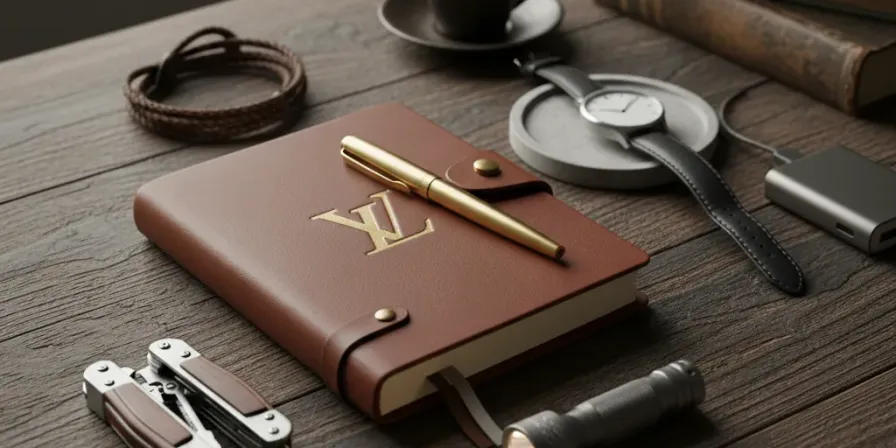
The person who has everything has a lot of junk.
I’ve watched my brother buy the same Bluetooth speaker for the third time because the previous two died after eight months. I’ve seen my neighbor spend $400 on a coffee maker with a digital display that now shows an error code every morning. We’ve all been to the birthday of someone who opens a gift, says “you shouldn’t have,” and puts it in a closet they’ll never open.
What I’m proposing is different. Buy them something they’ll still be using in fifteen years. Something that proves itself every time they pick it up. Something so well-made that the act of owning it becomes its own statement.
This isn’t about gifting luxury. It’s about gifting the last one they’ll ever need to buy.
The Philosophy Before the Products
Here’s what I’ve learned from six years in industrial design and a lifetime of returning things that broke on schedule: most products are designed to be replaced, not repaired. The seams are glued instead of stitched. The buttons are plastic instead of metal. The firmware will stop updating in 2027.
The person who “has everything” has a house full of things that look good unboxed and feel mediocre in the hand. They’ve settled. They’ve accepted that the nice pen runs dry after a month, that the flashlight flickers when it’s cold, that the wallet looks great until the leather cracks after a year.
Your job is to give them something that removes the friction of that settling. Something that says: “This is what you should have been using all along.”
I test most of my gift ideas in my office-shed out back. If something doesn’t earn its place on my desk after a week, it doesn’t make the list. What follows are things that have earned their place — things with heft, with intention, with parts that can be replaced when they eventually wear out.
EDC and Pocket Tools: The Things They’ll Touch Every Day
A Pen That Actually Writes
Most people have never held a good pen. Not a Montblanc (overpriced, writes like a felt-tip) — I’m talking about something machined, something with weight in the cap, something where the click mechanism has a satisfying mechanical thunk.
The Ti Arto EDC pen is what I give to people who say they don’t need a nice pen. Within a week, they’re texting me about how smooth it writes. It takes a Fisher Space Pen refill (the same pressurized ink cartridge NASA uses) so it’ll write upside down, in the cold, on a damp receipt. The body is titanium, which means it weighs enough to feel expensive but won’t rust if they forget it in their pocket through a laundry cycle.
Caveat: It costs more than a pack of Bics. But they’ll never buy another pen again.
Alternative: Fisher Space Pen — $25–$55
The standard Bullet model is the size of a AA battery when capped, opens to full length when posted. The brass version develops a patina over time, which is a feature, not a flaw. It writes upside down, underwater, in extreme cold. The matte black version runs about $55 if you want something that looks less like a space artifact and more like it belongs in a jacket pocket. Either way, this is a pen they’ll still be carrying in a decade. The clip will outlast most of their relationships.
A Knife That’ll Outlive Them
I don’t care if your giftee doesn’t “carry a knife.” Everyone needs a knife occasionally, and the people who say they don’t are the ones who end up using their house keys as a makeshift blade and scraping their knuckles.
The Benchmade Bugout is the answer. It weighs 1.85 ounces. That’s less than most phones. The AXIS lock is smooth, ambidextrous, and satisfying in a way that liner locks never are. The S30V blade steel holds an edge through actual use — not just cutting paper to show off, but breaking down cardboard, slicing rope, the mundane stuff that dulls cheap steel in a week.
Caveat: The stock Grivory handle scales feel flimsy. They’re not — they’re strong enough — but they don’t feel like a $180 knife. Budget an extra $40–$60 for aftermarket G10 or titanium scales. It transforms the knife from “lightweight and practical” to “lightweight, practical, and satisfying to hold.”
I recommended a more budget-friendly knife option in my guide to birthday gifts for dad under $100 — the Petrified Fish Folder. Different price point, same philosophy: buy the thing that earns its pocket space.
A Flashlight Without an App
The flashlight market is saturated with “smart” options that require Bluetooth pairing and firmware updates. I don’t want a flashlight I need to update. I want a flashlight I can turn on.
The Olight Baton 3 is 6.5 centimeters long and puts out 1,200 lumens on turbo. The magnetic charging cable snaps onto the tail — no opening the battery compartment, no proprietary dock sitting on your nightstand looking ugly.
Three things I like: the pocket clip is deep-carry and doesn’t snag. The side switch has a distinct click so you don’t accidentally activate it. The beam pattern is useful — a bright center with enough spill to light a room, not a laser pointer that blinds everyone at the dinner table.
Caveat: The magnetic charger is proprietary, but the battery itself is a standard 16340. If you lose the cable, you’re not dead in the water — just inconvenienced.
Desk and Workspace: Objects That Earn Their Surface Area
A desk is prime real estate. Everything on it should justify its existence by being used daily or by being genuinely pleasant to interact with. Here’s what qualifies.
A Stand That Solves the Dongle Problem
The Orbitkey Nest v2 is a portable desk organizer and wireless charger in one. It’s about the size of a thick paperback. The lid doubles as a 5W Qi charging pad. Inside, configurable dividers hold cables, adapters, earbuds, SD cards — all the small things that migrate across a desk like tumbleweeds.
The satisfying part: the hinge. It opens to exactly 90 degrees and stays there. The exterior is a soft-touch material that doesn’t collect fingerprints. It weighs enough to feel substantial — about 350 grams — without being something you’d leave behind on a trip.
Caveat: The wireless charging is slow. Five watts. Fine for overnight, useless if they need a quick top-up before a meeting. Don’t buy this for the charging — buy it because it solves the “where did I put that dongle” problem permanently.
A Notebook They Won’t Want to Replace
Moleskine built an empire on mediocrity. The Leuchtturm1917 Hardcover A5 is what the Moleskine wishes it was. Thread-bound so it lays flat. Numbered pages with a pre-printed table of contents. 80gsm paper that handles fountain pen ink without bleeding through — most of the time.
The cover holds up to years of being shoved into bags. I’ve filled six of these. The binding on the first one still hasn’t cracked.
Caveat: If they use wet fountain pen inks — the really saturated, sheening stuff — you’ll get some ghosting on the page. It’s not a dealbreaker, but it’s there. If they’re serious about fountain pens, look at Rhodia instead.
Jordan mentions the Leuchtturm1917 in her 21st birthday gift guide too — good taste transcends age brackets.
Audio: Sound That Doesn’t Expire
I’ve spent six years in audio production, and I’ll tell you this: most consumer audio products are designed to be replaced. The batteries degrade. The Bluetooth codec becomes outdated. The app stops getting updates.
The good stuff doesn’t have these problems because it doesn’t need batteries, Bluetooth, or apps.
Headphones That Don’t Need a Subscription
The Sennheiser HD 600 has been in continuous production since 1997. The design hasn’t changed because it doesn’t need to. Open-back, wired, no battery, no noise cancellation, no app. Just a 6.5mm cable and a pair of 40mm drivers that produce the most natural, un-hyped sound you’ll find under $500.
The soundstage is wide. Vocals sit right in the center. Bass is present but not boosted — you hear what was recorded, not what some algorithm decided you’d prefer. The velour ear pads are replaceable and cost about $25 when they eventually compress after a few years.
I’ve had mine in the office-shed for four years. They’ve been stepped on, sat on, and yanked off the desk by the cable more times than I can count. Still sound exactly the same.
Caveat: These are open-back. Sound leaks in and out. Not for the office, not for the subway, not for shared spaces. These are home headphones. If they need something for commuting, look at the Sennheiser HD 25 — closed-back, nearly indestructible, and about $150.
Desktop Speakers That Don’t Need a Receiver
The Audioengine A2+ are self-powered, about 6 inches tall, and have a built-in DAC. Plug in a USB cable from the computer and you’re done. No receiver, no amp, no dongle.
The sound is surprisingly full for their size. They won’t rattle the windows, but in a normal-sized room at a normal listening distance, they fill the space with real, detailed audio. The walnut veneer version looks like actual furniture, not tech.
Caveat: The power brick is enormous and ugly. It lives behind the desk, and you’ll never look at it, but I resent its existence. Also, the bass rolls off below about 65Hz — fine for most music, but if they’re into hip-hop or electronic music that relies on sub-bass, they’ll want to add a subwoofer eventually.
The One Big Splurge
Everything above is under $350. This section is for when the budget stretches and you want to give something that stops them mid-action and makes them think, “whoever bought this actually gets it.”
The Bag They Didn’t Know They Needed
A sling bag sounds like a boring gift. The Bellroy Venture Ready Sling 6L isn’t.
It’s the right size for daily carry — phone, wallet, keys, earbuds, a small notebook, a pen. The waterproof zippers actually work. The strap adjusts without flapping excess material everywhere. The magnetic buckle on the strap is one of those small design details that makes you wonder why every bag doesn’t have it.
I’ve used mine daily for over a year. The fabric hasn’t pilled. The zippers haven’t stiffened.
Caveat: Six liters sounds small on paper. It is small. If they’re the type to carry a water bottle, a tablet, and a backup charger everywhere, size up to the 9L version. But for most people, 6L is the sweet spot between “I have what I need” and “I’m carrying a suitcase to brunch.”
The Last Alarm Clock They’ll Ever Buy
I know. An alarm clock. But think about it: your giftee probably checks the time on their phone, which means they see notifications, the weather, their unread emails — all the low-grade anxiety of the digital world first thing in the morning.
The Braun BC09S resets their relationship with morning. It’s quiet. It’s analog — no glowing screen, no smart features, no updates. You set the time and it sits there. The design is Dieter Rams in 1989, which means it looks better than anything else on their nightstand and will continue to look better for the next thirty years.
Yes, their phone already has an alarm. This isn’t about function — it’s about ritual. It’s about waking up to a beautiful object instead of a glowing rectangle.
The Last One They’ll Ever Need to Buy
Here’s what I believe: the person who has everything doesn’t need more things. They need better things. Things that replace the stuff they’ve been settling for — the pen that barely works, the headphones with the cracked headband, the flashlight that takes three clicks to turn on and nobody remembers which three.
The best birthday gift for someone who has everything isn’t something they’ll unwrap and say “oh, nice.” It’s something they’ll pick up six months from now, in the middle of an ordinary Tuesday, and think: this is the last one of these I’ll ever need to buy.
When you give someone a tool that works perfectly, that fits their hand like it was made for them, that they’ll reach for automatically because it never fails — you’re giving them something more than an object. You’re giving them the experience of not having to think about that thing anymore. The decision is made. The friction is gone.
That’s the gift. Not the object itself, but the end of replacement cycles. The end of settling.
If you’re shopping for a specific person rather than the generic “has everything” archetype, the targeted guides might serve you better: birthday gifts for her, birthday gifts for him, or Father’s Day gifts dad will actually want.
Pick one thing from this list. Make it the best version of that thing you can find. Spend the time to get it right. They’ll notice.

Leo Vance
I review gear based on a simple philosophy: if it feels cheap, it is cheap. Let's find you something that won't break by next Tuesday.